
The Shift to Digital Twins How BIM is changing the Construction Landscape in the UK (Part 1 – Foundations and Benefits)
A digital revolution is on the threshold of the UK construction industry. Over the past decades, the industry was operating on paper-based designs, disjointed workflows and siloed communication, which in many cases caused delays, cost overruns and inefficiencies. But rapid changes are afoot. Yesterday, primitive technological solutions dictated the construction of buildings and infrastructure; today, more sophisticated digital tools are transforming the industry into smarter construction with more data.
The focal point of this change is Building Information Modeling (BIM) and Digital Twins. BIM already has realigned project collaboration as all significant participants, architects and engineers, as well as contractors and facility managers, can collaborate around one data-rich model. The thing is that now, when the concept of Digital Twin technology appears, this goes even further. The virtual replica of buildings and infrastructure could be dynamic, reflecting the buildings and infrastructure performance in the physical world, and be able to provide insights impossible to get before.
This modernization is not only efficiency-based but rather an evolution aimed at delivering safer, more sustainable, and future-proof properties. BIM and Digital Twins are transforming how the UK designs and manages its structures, be that running predictive maintenance systems, minimizing energy use, or maintaining smart cities.
To serve as an introduction to the blog, in the first section, we will deconstruct the basics: what exactly is meant by BIM and Digital Twins, how they can complement one another, why the UK has established itself as a global leader in the uptake of both tools, and what are the main advantages of both technologies to the construction industry.
Understanding BIM and Digital Twins
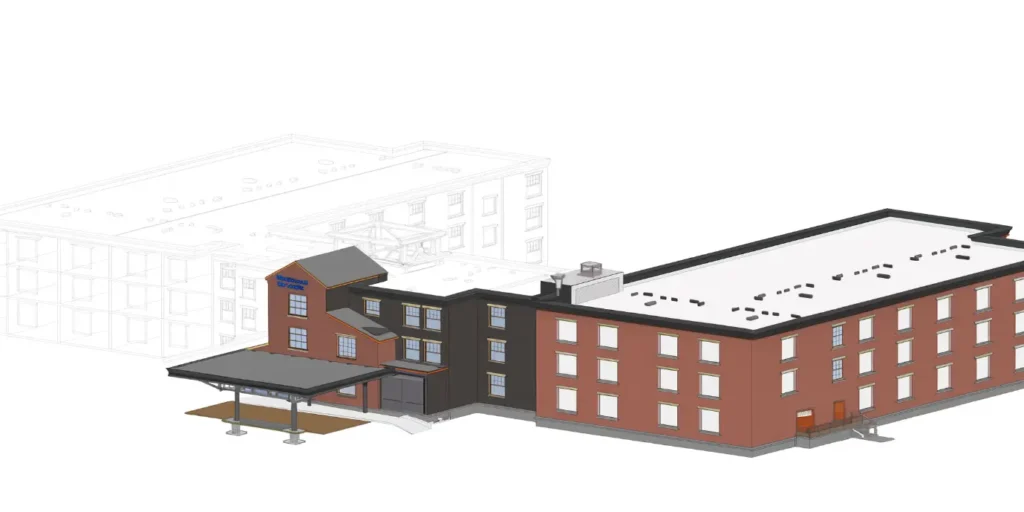
The transition from static design to dynamic asset management.
What is Building Information Modeling (BIM)?
BIM is far more than just 3D modeling. It is a process-driven digital approach that allows architects, engineers, contractors, and facility managers to collaborate around a single, coordinated model of a building.
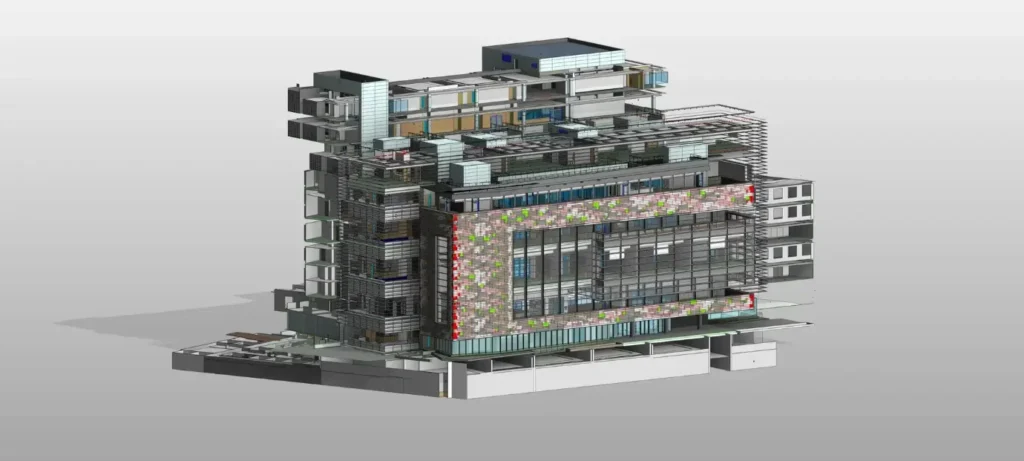
Architectural BIM Model
Core features of BIM:
- 3D models with embedded data for every building component
- Real-time collaboration between multiple project stakeholders
- Intelligent clash detection during the design phase
- Improved project scheduling and cost estimation
- Lifecycle data management for future operations and maintenance
BIM helps eliminate many of the problems that arise in traditional construction, such as design conflicts, miscommunication, and inefficient handovers.
The Gemini Principles (2018) set the foundational values for the UK’s National Digital Twin approach SOURCE
What is a Digital Twin?
Digital Tinning is thus a step ahead in BIM. A Digital Twin is a virtual replica of a physical building or infrastructure asset, kept updated in real-time with data collected from sensors, IoT devices, and manual inputs.
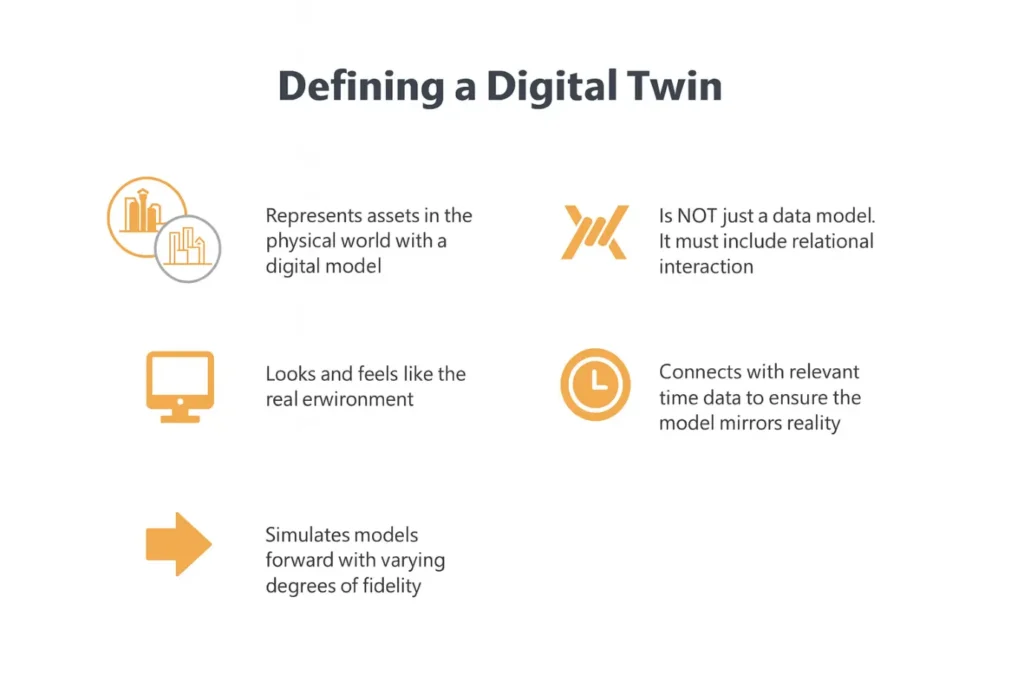
Defining a Digital Twins
Key Characteristics of Digital Twin:
- Real-time performance monitoring of buildings
- Live data on energy consumption, occupancy, and equipment condition
- Predictive maintenance alerts for failures about to occur
- Scenario simulation for better decision-making
- Full integration with a BMS
In simple words, BIM creates a model while Digital Twin keeps it alive after construction has been completed.
Relationship between BIM and Digital Twins
- BIM is the Foundational level for Digital Twins.
- The Detailed BIM Model acts as a Base to realize a Digital Twin.
- While the Building operates in the Physical world, Live Data feeds update the Digital Twin, hence making it a living model of the Asset.
- This allows the owners and operators to maximize performance, minimize costs, and extend building life.
- Government Mandates and Regulations
- The UK has been the leader in BIM adoption for several years now, driven by BIM.
The UK required fully collaborative 3D BIM (Level 2) on centrally-procured government projects by 2016 SOURCE
Key Benefits of BIM and Digital Twins for the UK Construction Industry
Moving BIM and Digital Twins means changes in the very ways that construction projects may be planned, built, and maintained.
Below are some of the main benefits prompting the adoption of BIM and Digital Twins in the UK.
Better Design Accuracy
- Intelligent 3D models resolve design problems.
- Clash detection allows early identification of conflicts between structural, mechanical, and electrical systems.
- Avoids rework in construction, which is very costly.
Enhanced Collaboration
- All concerned parties involved in the project work from the same central model.
- Real-time updates keep everyone informed.
- Architects, engineers, contractors, and facility managers coordinate activities better.
Cost Efficiency
- A more accurate cost estimate reduces the chance of budget overruns.
- Conflict resolution delays being prevented create more costs during construction.
- Building management for operational efficiencies creates cost savings in the long run.
Faster Project Completion
- Schedulers use automated computer programs to plan construction work sequences.
- BIM models enable the basic fabrication away from the project site.
- Less time lost in waiting for errors in design, errors in manufacture, or crude sol material.
Sustainability and Energy Efficiency
- An energy model simulates the actual energy performance of a building before it is constructed.
In addition to short-term project payoff, the use of BIM and Digital Twins is also shaping broad industry trends. They are influencing the development of regulatory frameworks, promoting the construction industry to become more sustainable, and promoting asset management creativity. As an example, UK government regulations and net-zero carbon goals are driving take-up, with the latter demonstrating that these technologies, despite remaining tools, are helping construction as a system evolve.
Conclusion
BIM and Digital Twins are a revolution in the way things have always been done in the construction industry, towards smart and data-led construction. Through awareness of their essence, association, and advantage, industry players can start conceptualizing how these technologies reveal efficiencies, minimize risk, and provide improved results. Nevertheless, ideas do not speak the full truth. Part 2 will shift focus to reality: what are examples of practical application of this paradigm shift, what does it mean, and what are case studies that show how BIM and Digital Twins are disrupting the future of construction in the UK?
Frequently Asked Questions
Digital Twin in construction – What is it?
A Digital Twin is a virtual representation of a building or other infrastructure asset that is displayed in real time, and kept up-to-date with live IoT sensors and additional data.
What is the relation between BIM and Digital Twins?
Digital Twins work based on BIM. A BIM model is developed during design and construction, and after live data is incorporated into it after construction it becomes a Digital Twin.
Why is the UK the most advanced in implementing BIM and Digital Twins?
UK governmental introductions such as the UK BIM Mandate and the National Digital Twin Programme are mandates that have helped drive the industry toward digitalization.
What are the major advantages of BIM and Digital Twins?
They also enhance cooperation, increase the accuracy of design, minimize costs, accelerate the delivery of projects, and assist in sustainability and energy efficiency targets.